
Loading YouTube
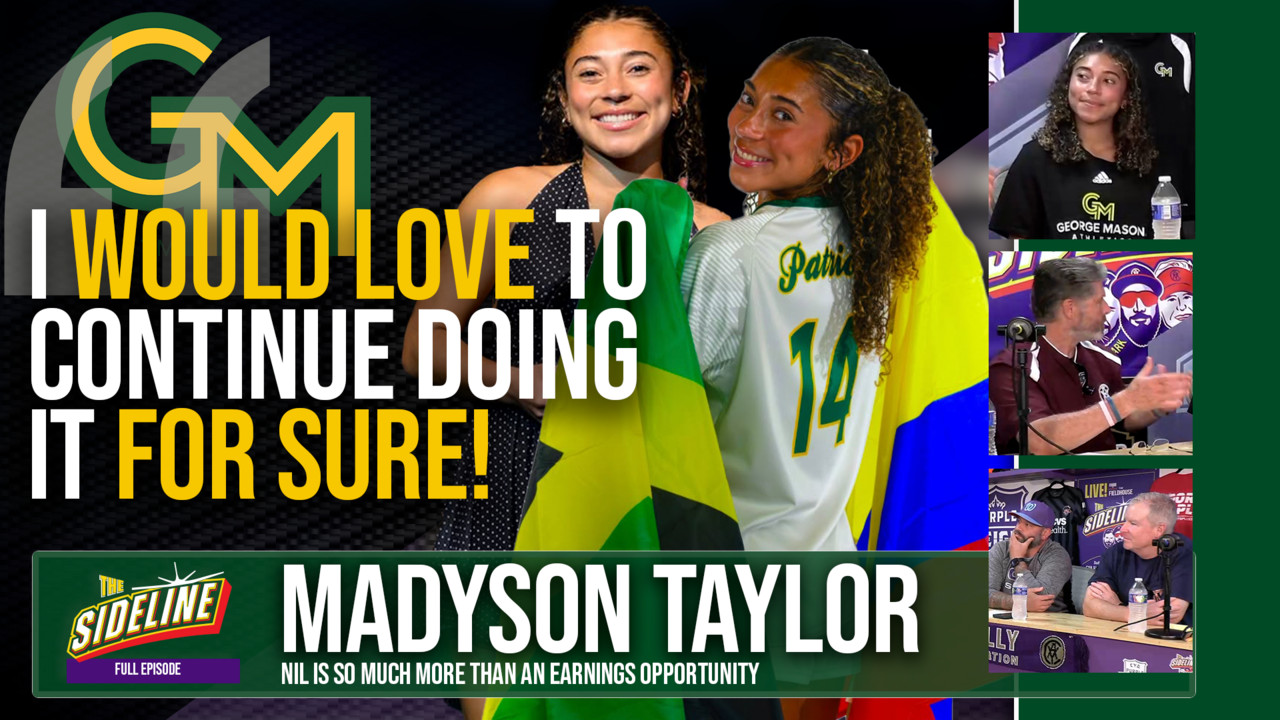
On this episode of The Sideline...
Episode overview
What does an NIL deal actually look like for a Division I athlete outside college football's biggest contracts? George Mason women's soccer defender Madyson Taylor explains how her first opportunity began when Mason's NIL staff asked her coach to recommend an athlete for a Crumbl partnership. Social media did not come naturally to her, but she accepted the challenge, brought teammates into the store and created a reel around the experience. George Mason later reported that the campaign generated 114,000 impressions and a 24 percent engagement rate, demonstrating how a local business and a college athlete can create measurable value together. Taylor also breaks down the obligations and compensation that can come with smaller NIL partnerships. Crumbl preferred roughly one post per month and provided merchandise, cookie cards and products. A separate contrast-therapy partnership called for weekly promotion in exchange for access to recovery services such as ice baths and a sauna. Neither agreement paid her cash, but each gave her practical benefits while helping her learn content creation, brand communication and personal marketing. Her experience offers families a grounded answer to common questions about how college athletes get NIL deals, what athletes must provide and whether every agreement includes money. That work still has to fit around training, treatment and academics. Taylor describes why the student comes first in student-athlete, how she manages a Community Health major and Division I soccer, and why discipline and support systems matter as she works toward professional soccer in Europe.
How College Athletes Can Get Their First NIL Deal
Madyson did not cold-pitch Crumbl or enter the partnership with a large creator profile. George Mason staff asked her coach to recommend an athlete, and the coach selected her because she was dependable, well-rounded and willing to take on the assignment. She stepped outside her comfort zone, involved her teammates and turned a simple store visit into branded social content. George Mason later reported 114,000 impressions and a 24 percent engagement rate from the campaign.
NIL Compensation Does Not Always Mean Cash
Madyson explains that her agreements provided value through products and services rather than direct payment. Crumbl supplied merchandise, cookie cards and free products in return for periodic posts. A contrast-therapy studio offered access to ice baths and a sauna in exchange for weekly promotion. These arrangements show how NIL compensation can support an athlete even when the deal does not resemble the high-dollar contracts that dominate national coverage.
NIL Content Has to Fit Around the D1 Schedule
Creating sponsored posts is an additional responsibility layered onto training, film, lifting, treatment and school. Madyson says she has to keep the student in student-athlete while completing a Community Health degree and caring for her body through a demanding soccer season. Her experience shows why an effective NIL opportunity must fit the athlete, provide clear expectations and offer enough value to justify the time required away from sport and academics.
How College Athletes Can Get Their First NIL Deal
Madyson did not cold-pitch Crumbl or enter the partnership with a large creator profile. George Mason staff asked her coach to recommend an athlete, and the coach selected her because she was dependable, well-rounded and willing to take on the assignment. She stepped outside her comfort zone, involved her teammates and turned a simple store visit into branded social content. George Mason later reported 114,000 impressions and a 24 percent engagement rate from the campaign.
Open this episode
Video episodesLive

YouTubeFull episodes, clips, and visual segments from the show.
Video and audioLive

SpotifyStream video and audio episodes, follow the show, and keep new releases in your queue.
Podcast appsUnavailable

Apple PodcastsSubscribe in the Apple ecosystem and keep new episodes in your queue.
Smart speaker readyUnavailable

Amazon MusicUse Amazon Music to listen across devices and smart speakers.
Keep Exploring