
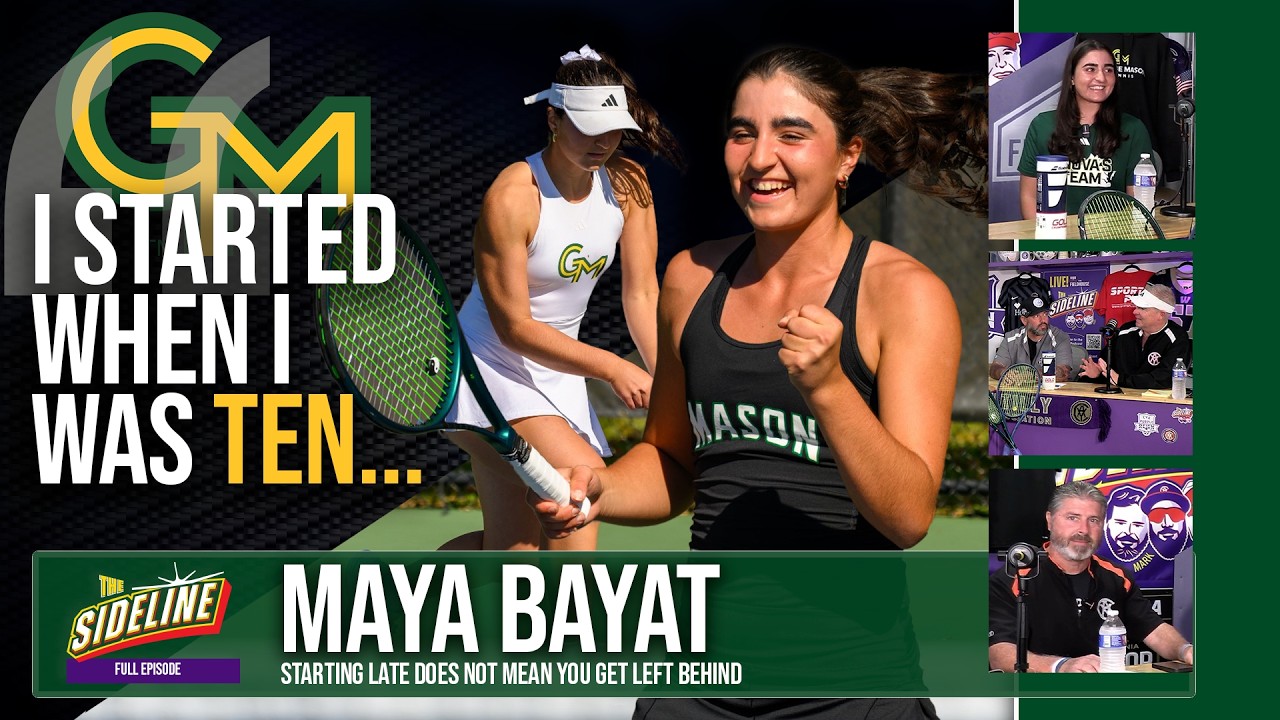
On this episode of The Sideline...
Episode overview
Can an athlete who starts tennis later still reach Division I? Maya Bayat started playing at 10 and did not enter tournaments until 14, but deliberate training, strong Mid-Atlantic competition and a carefully planned tournament schedule helped her earn a place at George Mason. She explains why national junior events matter to college coaches, how online high school created more time for travel and four-hour training days, and why that flexibility only works when the athlete takes responsibility for learning. Bayat also describes what Division I college tennis actually demands. A day can begin with a 6:45 a.m. lift and end with a master's class at 10 p.m., with recovery, practice, tutoring and art research in between. On the court, she had to grow from a defensive counterpuncher into a more complete all-court player while adjusting from the individual focus of junior tennis to a team-first college environment. Off the court, a George Mason sports nutritionist helped her understand that training without enough food limited the value of her work. She also offers a practical view of NIL in a non-revenue sport: local restaurant, yoga and wellness partnerships may not resemble headline football contracts, but they teach athletes how to market themselves, work with businesses and build a professional identity.
Starting Tennis Later Does Not End the D1 Goal
Maya started tennis at 10 and tournaments at 14, years later than many elite players. She closed the gap through deliberate training, strong competition and a tournament plan built around development and exposure. Her path shows families that a later start can still lead to Division I when the athlete has good coaching, a realistic schedule and the discipline to improve consistently.
Recruiting Requires More Than Match Results
College coaches watch national tournaments to see how prospects compete under pressure, but they may also evaluate practice habits, fitness and daily discipline. Maya used asynchronous online school to create time for travel and roughly four hours of training while remaining responsible for her education. She says players should expect the recruiting pathway to function like a full-time job during the most important junior years.
Nutrition and NIL Are Part of Athlete Development
Maya learned that early lifts and practices were less productive when she skipped breakfast or waited until noon to eat. Working with George Mason staff changed how she fuels before and after training. She also explains that NIL for tennis often means local partnerships rather than major contracts, but those opportunities still build useful skills in marketing, communication and personal branding.
Starting Tennis Later Does Not End the D1 Goal
Maya started tennis at 10 and tournaments at 14, years later than many elite players. She closed the gap through deliberate training, strong competition and a tournament plan built around development and exposure. Her path shows families that a later start can still lead to Division I when the athlete has good coaching, a realistic schedule and the discipline to improve consistently.
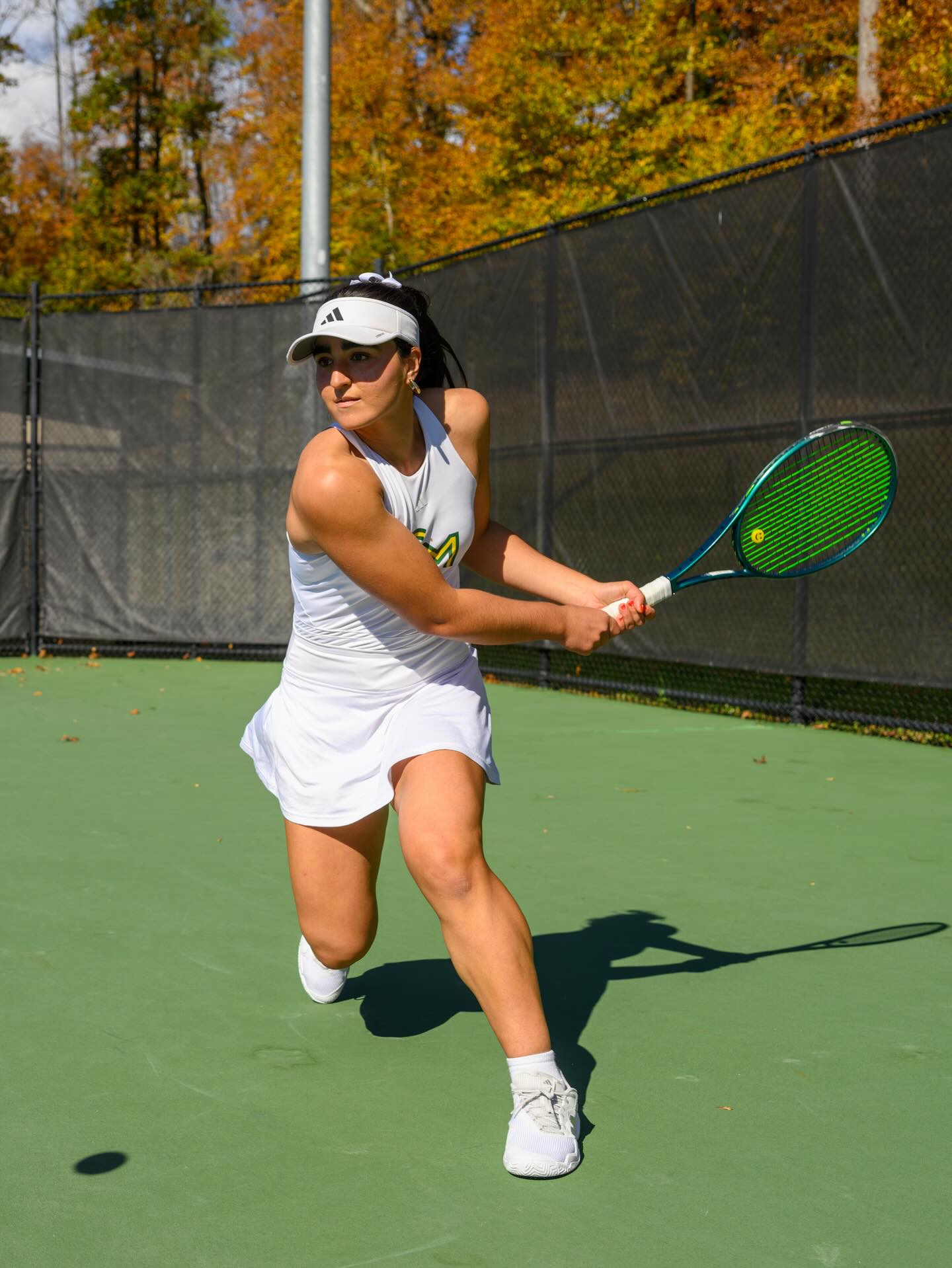
Hosted by
Open this episode
Video episodesLive

YouTubeFull episodes, clips, and visual segments from the show.
Video and audioLive

SpotifyStream video and audio episodes, follow the show, and keep new releases in your queue.
Podcast appsUnavailable

Apple PodcastsSubscribe in the Apple ecosystem and keep new episodes in your queue.
Smart speaker readyUnavailable

Amazon MusicUse Amazon Music to listen across devices and smart speakers.
Keep Exploring